ID : 81536
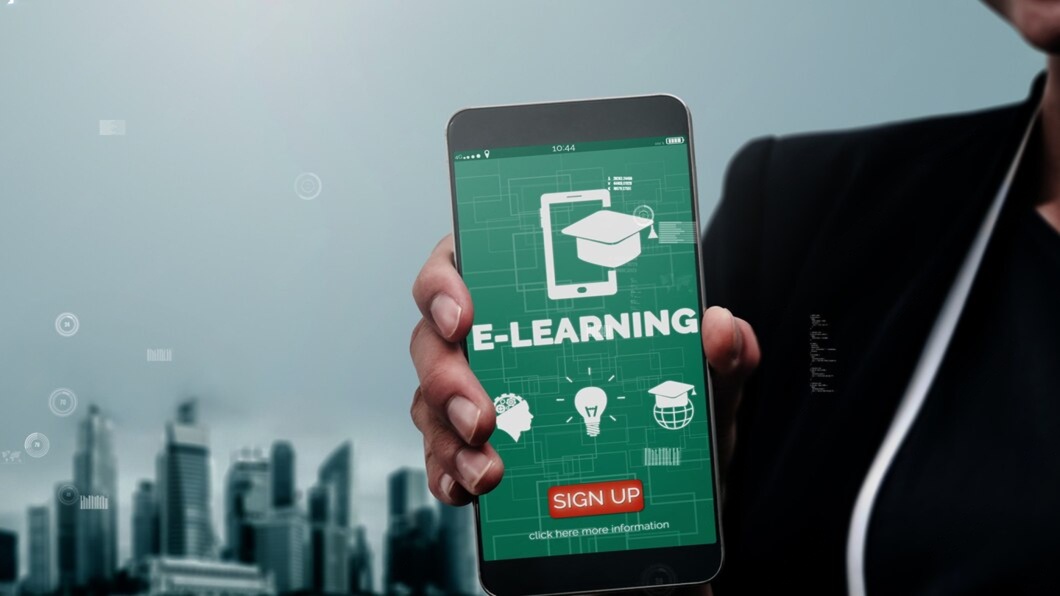
The education sector has been a very dynamic industry, which has changed with the changes in technology to accommodate the constantly changing needs of learners. The advent of digital learning, particularly the use of mobile applications, has transformed how students consume educational content. By 2026, the history of education app development is expected to keep shaking the traditional ways of learning, as it is likely to be more personal, more accessible, and more engaging to learn.
A field of education app development company is very crucial in the transformation. The development of apps that make use of some of the most recent technologies such as AI, AR/VR, and data analytics helps these companies to allow educational facilities, teachers, and students to use more effective and involving educational approaches. This blog will discuss the way in which the education app development landscape will evolve in 2026, the place of different technologies, and how it will transform the future of learning.
In 2026, Artificial Intelligence (AI) has ceased to be a hypothetical phenomenon and is becoming one of the potent instruments that transform the educational environment. AI-based education apps can also respond to the requirements of individual students. These applications use learning patterns and find weak areas and provide individual specifications on how students can become better. An example of AI-based tutoring is an AI-driven system that can assist students instantly, respond to questions, and guide them as a human tutor would.
The AI can also be used to make smart assessments where students are tested according to their progress as opposed to taking an exam. These applications can analyze real-time data to modify the delivery of the content in order to make sure that every student is able to learn at his/her own pace. One of the major reasons that will trigger the demand for education app development companies in 2026 is the capacity to develop genuinely personalized learning experiences. And in addition to producing apps that aid in education, these companies are also defining the future of the learning process.
Virtual Reality (VR) and Augmented Reality (AR) are also destined to become a part of education applications development in 2026. These technologies make the process of learning out of the conventional classroom creating and providing interactive experiences. With some subjects such as science, history, and geography, VR may offer virtual field trips where the students arrive in outer space, historical sites, or even inside the human body without leaving the classroom.
AR, in its turn, superimposes digital data onto the real world. As an example, the student might use his/her smartphone or tablet and scan a textbook, and the application might make the illustrations come alive and learn in a more interactive and engaging manner. Physical and digital experience is transforming the way students interact with the content and make learning more interactive, instinctive, and efficient.
With the implementation of AR and VR in educational applications, education app development agencies are giving educators new means to improve lesson plans and deliver an immersive experience in which students are able to learn concepts in a way that traditional methods cannot possibly equal. The future of AR and VR in education is bound to grow further in 2026 and provide additional opportunities to learn in an interactive manner.
Accessibility of mobile learning is one of the biggest advantages. It is now possible to get learning materials from any place in the world because of the advent of smartphones and tablets. Students are able to continue their education without being allied to a physical classroom whether it is in a remote village, a busy city or a coffee shop.
Education apps are also becoming sophisticated in 2026 and have a variety of features that allow them to make the process of learning more efficient and easier. These applications enable students to pursue courses, monitor advancement, and even cooperate with other people all from the comfort of their phones. Access to course material, assignments and examinations on the go means that students can learn anytime and anywhere they desire creating a flexible learning model that can best suit the contemporary fast-paced world.
A mobile app development company in Houston or any other part of the world plays a significant role in ensuring the availability of these apps and their functionality. They make sure that apps are device and operating system-optimized, which provides a platform-independent user experience. Those companies also contribute to the possibility of combining the features, such as push notifications, instantaneous feedback, and offline access to materials, which positively affect the learning process and make education more accessible.
Another important trend in educational app development is gamification. The developers can make learning more enjoyable and interactive by including game mechanisms in educational apps. Students get more encouraged to accomplish tasks, receive rewards, and rank up when they advance in the content. The presence of points, badges, and leaderboards gives a feeling of accomplishment, interactive quizzes, puzzles and challenges make students excited.
It is a very effective strategy when it comes to maintaining the interest of younger learners in their education. Learning can be enjoyable and even rewarding through educational games that are based on storytelling, adventure, and competition. The companies that are developing education apps are not only making the process of learning more efficient with the help of gamification, but are also turning it into fun.
Gamification will remain an important part of education apps, as developers develop more and more immersive experiences with mobile devices getting more powerful. It can be puzzle-based learning, it can be role-playing games, it can be virtual simulations or it can be an endless list of opportunities that gamified education can achieve.
Data analytics is among the strongest tools that can be used by both educators and students in 2026. Education apps that help to monitor student progress and performance can be considered as an important indicator of individual learning requirements. These apps can be used to propose specific interventions that will enable students to perform better by analyzing data on test scores, study habits, and engagement.
As an example, in case a student is underperforming in a specific topic, they can automatically be recommended some extra practice activities or be given the resources to be able to get the concept. Data analytics can also help teachers to recognize trends, performance of classes, and modify teaching techniques.
The data analytics are also used to develop adaptive learning systems, as the content is developed according to the learning pace and style of a student. These systems offer a very customized learning process which is flexible to the requirements of the student which means that the student is given all the support and guidance to achieve.
The old model of education was mostly focused on individual learning practice however, in 2026 there is a transition to more collaborative learning experiences. Social features have now been included in education apps that enable students to communicate with others, exchange resources, and collaborate on projects. All these aspects are assisting the students to acquire much-needed soft skills e.g. communication, teamwork, and problem solving, which are critical in the present global labour market.
In the app, students are able to form study groups, discuss their studies online, or do a group project. These apps are enabling students to learn from each other and establish good interpersonal relationships because of the community and collaboration they can create.
In addition, collaborative learning tools are allowing educators to adopt blended learning models where students are able to collaboratively learn in a virtual classroom, in addition to face-to-face learning. This integration of online and offline learning spaces is rendering education more plastic and dynamic.
With the advent of more education apps and their usage, security and privacy issues are gaining importance. As more and more personal data is gathered using these apps, it is important to ensure that the data is not breached in a manner that is misused. The app developers working in the field of education should adhere to such regulations as the FERPA (Family Educational Rights and Privacy Act) and GDPR (General Data Protection Regulation) to make sure that the personal data of students is safe and sound.
The companies developing apps in the education field are focusing on security in 2026, as they have integrated high-level encryption, multi-factor authentication, and other security measures to protect sensitive data. Meanwhile, they are creating applications that are non-technical which means that students and teachers can use the tools they require without jeopardizing their security.
Included in the future of education development are the prospects of the education app. More achievements in the field of AI, AR/VR, gamification, and data analytics are likely to be achieved by 2026, and education will become more personalized, engaging, and accessible than ever before. The growth of mobile phones and the increasing need to foster flexibility in the learning processes will keep pushing the use of educational applications in schools, universities, and companies.
The use of high-tech tools will unleash the possibilities of learning, including AI-based tutors and virtual classrooms. With the ever-growing innovations in education application development corporations, there will be a time when digital learning will become a natural aspect of our lives.
Education app development is changing how we learn to provide more personal, flexible and engaging learning experiences that were previously unimaginable. As AI and AR/VR develop, alongside data analytics, these apps are not only helping to make education better, but also more convenient and interactive. With the digital learning environment expected to experience changes in the year 2026, education app development firms will be on the frontline developing the next wave of tools that will determine the future of the education sector.
For individuals wishing to develop an education application that can transform the learning process, it is important to collaborate with a knowledgeable company that deals with education app development. Regardless of whether you are a learning organization or an individual developer, the investment in the appropriate tools and technologies will help to make your application shine in the ever-changing industry.





53, William streets
£100.00 (Negotiable)