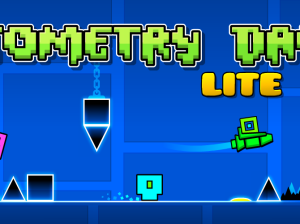
Ever found yourself yearning for a game that’s equal partsexhilarating, frustrating, and incredibly satisfying? Look no furtherthan geometry dash. Thisdeceptively simple-looking rhythm-based platformer has captivated millions withits unique blend of precise timing, vibrant aesthetics, and heart-poundingelectronic music. If you’re new to this world of flying cubes and spiky traps,or even if you’re a seasoned player looking to refine your skills, this guidewill walk you through the essentials of how to play and truly experienceGeometry Dash.
Introduction: The Rhythm of the Cube
At its core, Geometry Dash is about guiding a geometric icon(usually a cube) through a series of obstacles, all in perfect sync with thepulsating soundtrack. What starts as a seemingly straightforward tap-to-jumpmechanic quickly evolves into a complex ballet of precise movements, quickreflexes, and an almost intuitive understanding of the level’s flow. While itmight appear daunting at first, the beauty of Geometry Dash lies in itsaccessibility – anyone can pick it up – and its immense depth, offering endlesschallenges for even the most dedicated players.
Gameplay: Tapping, Flying, and Surviving
The fundamental gameplay loop of Geometry Dash iswonderfully simple: your icon automatically moves forward, and your job is tointeract with the environment to avoid crashing. Let’s break down the coremechanics:
- The Cube: This is your default form. A single tap or click will make it jump. Holding down will result in a longer jump, a crucial distinction for navigating different gaps.
- The Ship: Upon entering a ship portal, your icon transforms into a spacecraft. Holding down now makes the ship fly upwards, while releasing makes it descend. Mastering its momentum and navigating narrow passages is key here.
- The Ball: The ball form flips gravity with each tap. This means a tap will make it cling to the ceiling, and another tap will return it to the floor. Timing is everything to avoid spikes and other hazards.
- The UFO: Similar to the ball, the UFO jumps with each tap, but without the gravity flip. It’s like a series of small, controlled hops, requiring rapid tapping for elevation.
- The Wave: Perhaps the most challenging form, the wave moves diagonally. Holding down sends it upwards at an angle, and releasing sends it downwards. Precise micro-taps are often needed to weave through tight corridors.
- The Robot: The robot acts like an enhanced cube, allowing for higher, longer jumps when holding down, and small hops with quick taps.
- The Spider: This eight-legged creature teleports to the nearest surface with each tap, making it ideal for navigating complex, multi-layered environments.
Beyond these core forms, you’ll encounter variousinteractive elements:
- Jump Rings: These rings propel you upwards, often requiring precise timing to hit them at the right moment.
- Pads: Jump pads, yellow pads, and pink pads all provide different levels of propulsion.
- Portals: These transformative gates change your icon’s form, its speed, or even flip the entire screen upside down, keeping you constantly on your toes.
- Gravity Pads: These green pads temporarily reverse your gravity, adding another layer of complexity to your movements.
The ultimate goal in each level is to reach the end withouthitting any obstacles. Failure means an instant restart from the beginning,fostering a cycle of trial and error that is both frustrating and incrediblyaddictive.
Tips for the Aspiring Dash Master
Conquering Geometry Dash requires more than just goodreflexes; it demands patience, observation, and a willingness to learn fromyour mistakes. Here are some tips to help you on your journey:
- Start Simple: Don’t jump straight into the hardest levels. Begin with the official “Easy” and “Normal” levels to get a feel for the different icon forms and their mechanics. Gradually work your way up.
- Practice Mode is Your Friend: This invaluable feature allows you to place checkpoints throughout a level. Use it extensively to isolate difficult sections and master them before attempting a full run. Don’t be afraid to spam checkpoints!
- Listen to the Music: The levels are meticulously designed to sync with the soundtrack. The music often provides cues for jumps, changes in speed, and upcoming obstacles. Let the rhythm guide your movements.
- Observe and Learn: Watch other players! Many YouTube channels feature skilled Geometry Dash players completing challenging levels. Observe their timing, their choice of forms, and how they navigate complex sections. You can learn a lot from their strategies.
- Develop Muscle Memory: Repetition is key. The more you play, the more your fingers and brain will instinctively know when to tap, hold, or release. This muscle memory is crucial for those split-second decisions.
- Don’t Get Discouraged: You will die. A lot. It’s part of the game. Embrace the frustration, learn from each death, and celebrate every small victory. The sense of accomplishment after beating a difficult level is truly unparalleled.
- Explore User-Created Levels: Once you’ve conquered the official levels, dive into the vast ocean of user-created content. The community is incredibly creative, offering an endless supply of challenges, from mind-bending puzzles to visually stunning auto levels.
Conclusion: A Symphony of Skill and Persistence
Geometry Dash isn’t just a game; it’s an experience. It’s atest of your reflexes, your timing, and your persistence. The journey from anovice struggling with “Stereo Madness” to a seasoned playerconquering “Demon” levels is a rewarding one, filled with moments ofintense concentration, exhilarating successes, and the occasionalkeyboard-slamming frustration. But it’s precisely this blend that makes GeometryDash so captivating. So, load up the game, crank up the volume, andprepare to embark on a rhythmic adventure where every tap matters. HappyDashing!